








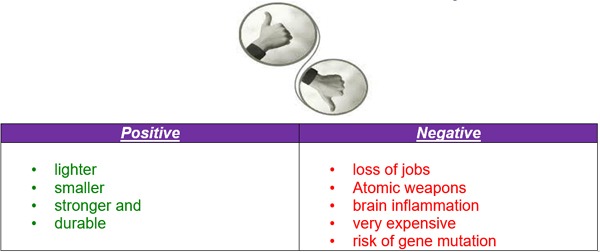
The purpose of this tale is to provide details about biomedical applications of nanoparticles (NPs) and their toxicology scrutiny to help readers quantify and qualify the toxicity of the drug products incorporating nanotechnology features.
Nano-technology in Medical applications
- Drug delivery & Potential Therapies (Cancer & HIV) – The efficacy of drug delivery through nanomedicine is largely based upon: efficient encapsulation of the drugs, successful delivery of drug to the targeted region of the body, and successful release of the drug.
- Imaging – Nanoparticles of cadmium selenide (quantum dots) glow when exposed to ultraviolet light. When injected, they seep into cancer tumors. The surgeon can see the glowing tumor, and use it as a guide for more accurate tumor removal.
- Sensing – Sensor test chips containing thousands of nanowires detect proteins and other biomarkers left behind by cancer cells. It enables the detection and diagnosis of cancer in the early stages from a few drops of a patient’s blood.
- Tissue engineering – Nanoparticles such as graphene, carbon nanotubes, molybdenum disulfide and tungsten disulfide are being used as reinforcing agents to fabricate mechanically strong biodegradable polymeric nanocomposites for bone tissue engineering applications
- Medical devices – Using nano devices enables computers to linked to the nervous system for sensing purposes.
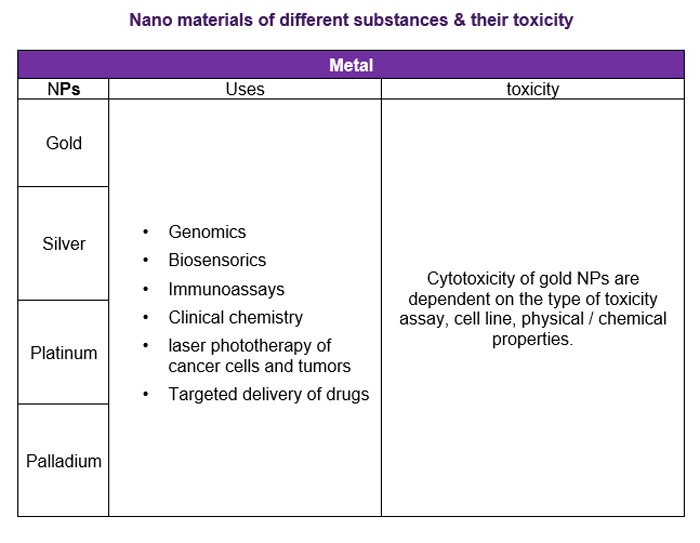
Toxicity of nanomaterials
- The production, use, and disposal of prepared NPs lead to discharges into air, soils, and aquatic systems.
- Therefore, it is crucial to investigate their transport into the environment and their impacts on human health.
- The indiscriminate use of engineered NPs with unknown toxicological properties might pose a variety of hazards for environment, wildlife, and human health.
Types of toxicity
Biological toxicity
- NPs enters the human system via Mucociliary movement, oral intake of food, cosmetics, drugs & drug delivery system in nano scale
- NPs primarily target the respiratory organs & gastrointestinal tract.
- They first interact with biological components like proteins & cells.
Environmental toxicity
- A lot of NPs to the environment, lead to nano particle pollution, by deposition of NPs in ground water & soil.
- It also affects the ecosystem. Ex; toxicity of fullerene -C60 in aquatic species, increased LPO in gills.
- The effects of NPs on plants and microbes are also rare.
Toxicity of nanoparticles depends on;
✔ Nature of chemical used for the synthesis
✔ Type of precursor
✔ Concentration of precursor
✔ Duration of exposure
✔ Personal susceptibility
✔ Mode of entry
✔ Size of nano particle
✔ Environmental factors
✔ Threshold value.
NANOPARTICLE ENTRY ROUTES INTO HUMANS
The nano particle ranges between 1 nm to 100 nm, enters into the human body through inhalation, skin contact & ingestion.
Inhalation
1. Most important route for the intake of airborne nano particle.
2. Depending on the size, particles are trapped in mucous layer and 0.1 nm size particles are exhaled.
3. Less than 7.0, deposit deep inside the lungs.
4. Less than 0.1 deposits in the alveolus.
5. The inhaled material may alter the deposition of particles and may remain permanently within the lung tissues.
Skin contact
1. The penetration of nanoparticles through skin occurs via lipids and dissolved material.
2. It causes exposure of nanoparticles through skin absorption.
3. Lipid solubility & molecular size are the most important factors.
4. Higher lipid solubility & small molecular size enhance NPs transformation towards body.
Ingestion
1. Compared with inhalation & skin absorption, ingestion plays a minor role in the absorption of toxic materials in industries.
2. Toxic materials that are soluble in body fluids are absorbed in the digestive system & circulated by the blood.
3. During the process of synthesis contaminated objects may entered into the mouth.
4. Insoluble toxic nano dust by while swallowed with food or saliva affects body functioning.
Mechanisms of toxicity
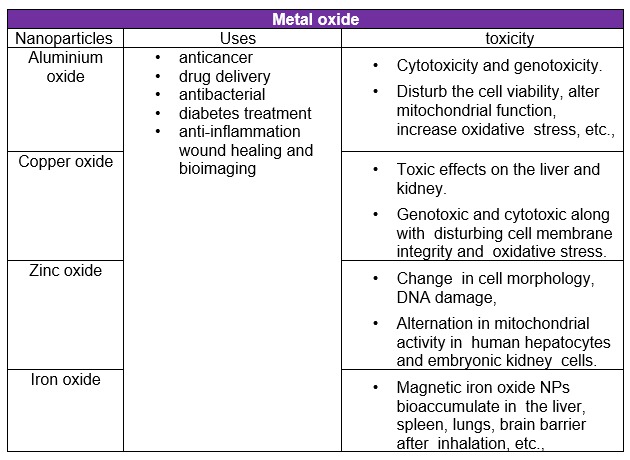
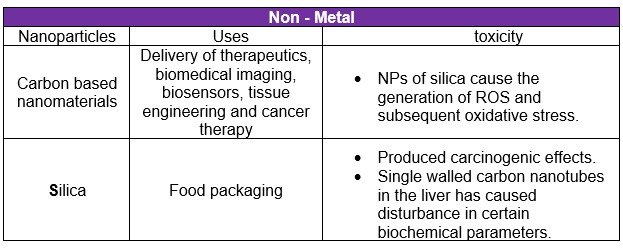
1. Oxidative stress: The greater chemical reactivity of nanomaterials can result in increased production of reactive oxygen species (ROS), including free radicals. ROS and free radical production is one of the primary mechanisms of nanoparticle toxicity; it may result in oxidative stress, inflammation, and consequent damage to proteins, membranes and DNA.
2. Cytotoxicity : A primary marker for the damaging effects of NPs has been cell viability as determined by state and exposed surface area of the cell membrane. NPs have been found to induce apoptosis in certain cells primarily due to the mitochondrial damage and oxidative stress brought on by the foreign NPs electrostatic reactions.
3. Genotoxicity : Metal and metal oxide NPs such as silver, zinc, copper oxide, uraninite, and cobalt oxide have also been found to cause DNA damage. The damage done to the DNA will often result in mutated cells and colonies as found with the HPRT gene test.
Toxic effects
✔ Allergy
✔ Fibrosis
✔ Organ failure
✔ Inflammation
✔ cytotoxicity
✔ Tissue damage
✔ ROS generation
✔ DNA damage
✔ Increase of Lipid peroxidation level
✔ Increase in expression of genes
✔ Decreases the rate of aerobic respiration
Reasons for toxicity
- Increased in the surface area to volume ratio.
- Chemical composition of the particles.
- Surface change of the particles.
- Hydrophobicity & lipophilic groups.
- Complementarity of nanostructures.
- Accumulation of innert particles in the body.
Although current toxicity testing protocols may be applied to identify harmful effects of NPs, research into new methods is required to address the special properties of nanomaterials. It is crucially important to assess their safety for sustainable implementation of nanotechnology with its full potential.
Nanomedcine and nanotoxicology are like the two sides of the coin, the worth this coin depends on its prudent use.
By
Dr. S. Ananda Babu
Assistant Professor
Department of Applied Chemistry
Sri Venkateswara College of Engineering
Pennalur, Sriperumbudur Tk 602 117
(The link for SVCE ERP portal is https://svce.mastersofterp.in)
- Full payment(The link for CUB portal is https://cubonline.biz/StudentLogin?Instname=SVCEFP)
- Installment payment(The link will be given today evening)
The sensors included in wearable devices depend entirely on the function and design of the device. IoT has become a big deal with sensor development as it spreads rapidly to science, industry, and even daily life. This folio discusses the role of IoT in modern materials chemists look into the trends in this field. It aims to form realistic knowledge that can be used in actual research field through theory and practice focused on ChemIoT.
Vital signs are used to measure the body’s basic functions. These measurements are taken to assess the general physical health of a person, giving clues to possible diseases and to show progress towards recovery.
There are four primary vital signs;
- Body temperature
- Blood pressure
- Pulse (heart rate)
- Breathing rate (respiratory rate)
However, depending on the clinical setting, the vital signs may include other measurements called the “fifth vital sign” or “sixth vital sign”. Vital signs are recorded using the sensors constructed based on metal, metal oxide, polymers and its composites. The technology revolution in the miniaturization of electronic devices is enabling to design more reliable and adaptable wearables, contributing for a world-wide change in the health monitoring approach. The next part discusses each of these signs, in terms of signal origin, medical and health importance, wearable sensors technology state-of-the-art.
- Temperature sensing devices: The most recent examples of flexible temperature sensors are first discussed with regard to their materials, structures, electrical and mechanical properties; temperature sensing network technologies in new materials and structural designs are then presented based on platforms comprising of multiple physical sensors and stretchable electronics.
- Blood pressure sensing devices: Blood Pressure can be measured both by invasive and non-invasive methods. In the non-invasive method, no piercing is required and is used easily. Blood Pressure Sensor is used to measure the blood pressure using the non-invasive method. It is similar to sphygmomanometer but instead of the mercury column, a pressure sensor is used to detect the blood pressure.
- Respiratory rate monitoring devices: Monitoring respiration rate is an important task while evaluating a subject’s health. Respiration rate monitoring devices can be classified by a number of ways depending on the manner of their use and their operation. There is an ever-growing demand for measuring respiratory variables during a variety of applications, including monitoring in clinical and occupational settings, and during sporting activities and exercise.
- Pulse or heart rate sensing devices: The preliminary research constructs the heart beat or pulse measurement for medical devices. The research prototype focuses the pulse rate and analysis system which consists of hardware and software parts.
- Blood oxygen saturation sensing devices: Lack of oxygen, commonly termed as hypoxia, is frequently encountered in different disease states and is detrimental to human life. However, at the end of the 19th century, Paul Bert and James Lorrain Smith identified what is known as oxygen toxicity. The molecular basis of this phenomenon is oxygen’s readiness to accept electrons and to form different variants of aggressive radicals that interfere with normal cell functions.
- Height, weight and body mass index (BMI) sensing devices: A number of different techniques for body composition assessment have been developed, from very simple indirect measures such as waist-to-hip ratio and calipers to sophisticated direct volumetric measurements based on three-dimensional imaging techniques. There are also a range of invasive or in vitro methods for body composition analysis such as inhalation or injection of water-accumulating or fat-accumulating agents, or dissection and chemical analysis of cadavers.
- Pain sensing devices: Facial expressions are among behavioural signs of pain that can be employed as an entry point to develop an automatic human pain assessment tool. Such a tool can be an alternative to the self-report method and particularly serve patients who are unable to self-report like patients in the intensive care unit and minors. A wearable device with a biosensing facial mask is proposed to monitor pain intensity of a patient by utilizing facial surface electromyogram. The wearable device works as a wireless sensor node and is integrated into an Internet of Things system for remote pain monitoring.
The Internet of Chemical Things is perched to alter further research for the better sensor developments. We believe it is time to protect our precious human resource by allowing our materials to assist sensor for our future biomedical development. In the next few years chemistry will change in the ways outlined.
By
Dr. S. Ananda Babu
Assistant Professor
Department of Applied Chemistry
SVCE